
In the mining, metallurgical, and wastewater treatment industries, slurry dewatering represents one of the most challenging and costly processing stages. As an advanced technology, the Ceramic Vacuum Disc Filter has emerged as a robust alternative to traditional cloth filters. By leveraging the capillary action of ceramic plates, this equipment minimizes filter cake moisture without the high energy consumption typically required by vacuum pumps.
Whether you are a production manager, a process engineer, or an industrial machinery procurement officer, this guide provides a highly specialized and comprehensive review of everything you need to know regarding the selection, capacity calculation, cost estimation, and purchasing of ceramic vacuum filters.
For a free consultation, real-time price inquiries, and order placement, please contact us:
- 56577916 21 98+ (Main Office Line)
- 322 1757 21 98+ (Direct Consultation)
- 9009504025 98+ (Sales Support)
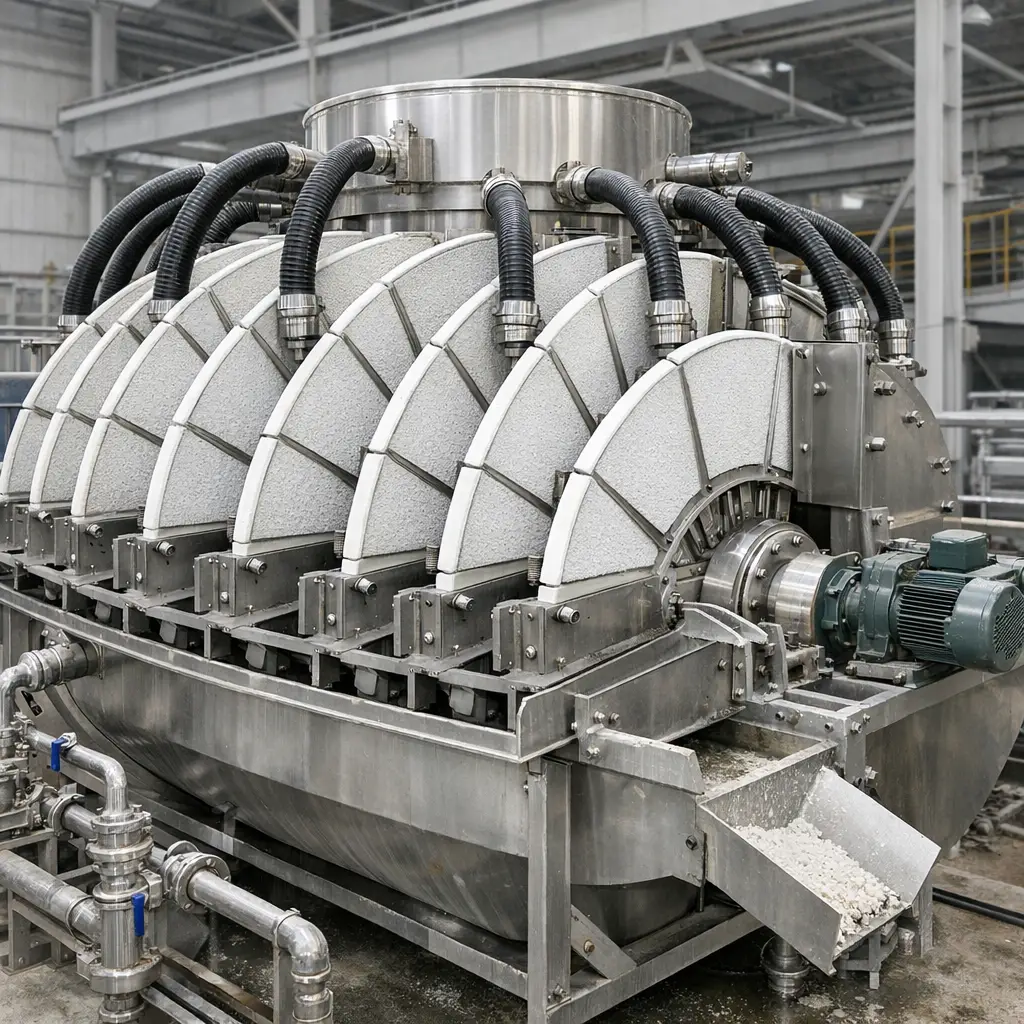
What is a Ceramic Vacuum Filter and How Does it Work?
A ceramic disc vacuum filter is a type of solid-liquid separation equipment. The core of this machine consists of porous ceramic discs.
The operation of this equipment is based on a combination of vacuum technology and the capillary effect. The pores of the ceramic plates are microporous to the extent that they allow water to pass through while completely blocking air. This unique characteristic results in the following:
- The vacuum pump consumes significantly less energy to create a vacuum (up to an 80%80\% reduction in energy consumption).
- The production of a filter cake (the filtered solid material) with a very low moisture content (typically between 8%8\% and 12%12\%).
- The discharged filtrate (purified water) is crystal clear and can be fully recycled back into the production line.
Main Applications of Ceramic Filters in Iranian Industries
Given the water scarcity in Iran and the critical need for water recycling in processing lines, investing in ceramic disc vacuum filters offers substantial economic justification in the following industries:
- Iron Ore and Copper Mines: For the dewatering of concentrates and tailings.
- Coal Industry: For water recovery from coal fines.
- Industrial Wastewater Treatment: For the dewatering of industrial sludge containing heavy metals.
- Chemical and Pharmaceutical Industries: For the high-precision separation of precipitates.
Ceramic Disc Vacuum Filter Purchasing Guide (Selection Criteria)
To purchase a ceramic filter that perfectly aligns with your production line requirements, you must carefully consider the following 33 vital parameters:
1. Filtration Area
The most critical factor in determining the machine’s capacity is the filtration area, which is measured in square meters (m2m^2). Commercially available machines typically range from 11 to 120120 m2m^2 in surface area. The selection of this value depends on the input slurry flow rate and the density of the solids.
2. Porosity Size of the Ceramic Plates
Depending on the size of the solid particles in your slurry, you must select ceramics with an appropriate pore size (usually between 11 and 33 microns). An incorrect choice will lead to premature clogging of the discs or the passage of solid particles into the purified water.
3. Backwash and Ultrasonic Cleaning Systems
One of the primary advantages of standard equipment is having an automatic cleaning system. Ensure that the machine you purchase is equipped with an acid/water backwash system and ultrasonic cleaning technology to maximize the operational lifespan of the ceramic plates.
What factors determine the price of a ceramic disc vacuum filter?
Due to currency fluctuations and the project-based nature of industrial equipment, quoting a fixed price is not practical. However, as a buyer, you should be aware of the factors that determine the final price on your proforma invoice:
- Filtration Area: This is the primary factor determining the price. Naturally, a 45 m245 \text{ m}^2 filter is more expensive than a 10 m210 \text{ m}^2 filter.
- Brand of Ancillary Components: The type of vacuum pump (European, Chinese, or Iranian), the brand of the electric motors, and the PLC type used in the control panel directly impact the price.
- Body and Shaft Material: Utilizing stainless steel (304 or 316) for acidic or corrosive slurries increases the cost of the equipment compared to using coated carbon steel.
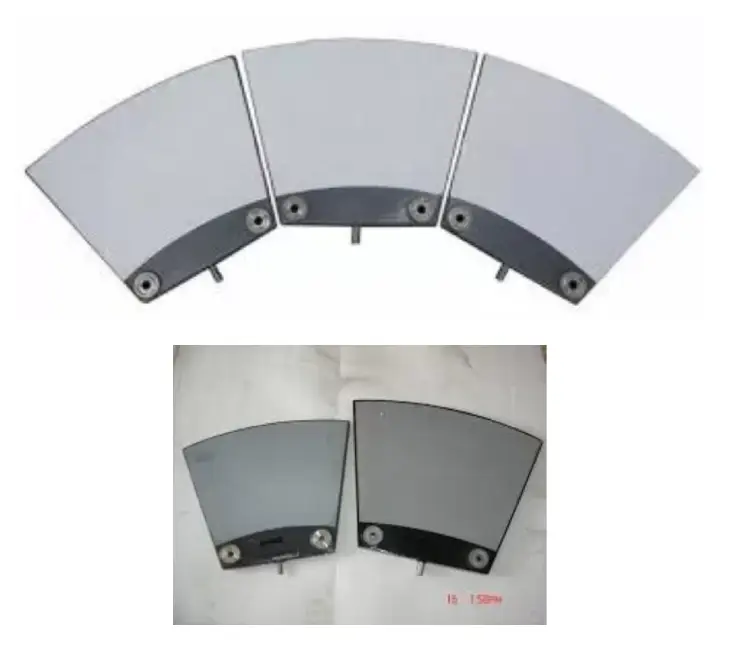
- Quality of Ceramic Discs: The lifespan of the discs dictates your depreciation costs. High-quality imported discs (made of alumina material) come at a higher price.
engineering and commercial terminology:
Consultation and Price Inquiry
Our sales engineers are ready to assist you with free engineering consultation, calculating the required capacity for your production line, and providing an official proforma invoice for the ceramic vacuum disc filter.
For free consultation, real-time price inquiries, and order placement, please contact:
- 021-56575111 (Dedicated Office Line)
- 0912-3221757 (Direct Consultation)
- 0900-9504025 (Sales Support)
Frequently Asked Questions (FAQ)
What is the service life of the ceramic discs in a vacuum filter?
The service life of the discs depends on the type of slurry and the washing system. However, on average, with the proper use of an ultrasonic backwash system, they have a useful operating life of 12 to 24 months.
Is the ceramic disc filter suitable for acidic slurries?
Yes. If the equipment is ordered with the body and wetted parts made of stainless steel (such as SS316), combined with the inherent chemical resistance of the ceramic, this machine delivers excellent performance in acidic environments.
How do I calculate the required vacuum filter capacity for my plant?
An accurate calculation requires knowing the inlet flow rate (m3/hm^3/h), the solid weight percentage of the slurry, the particle size distribution (Mesh), and the material density. For precise calculations, you can contact our engineering experts.
For free consultation, real-time price inquiries, and order placement, please contact:
- 021-56575111 (Dedicated Office Line)
- 0912-3221757 (Direct Consultation)
- 0900-9504025 (Sales Support)

