
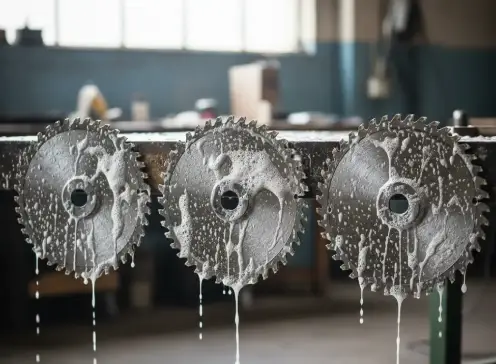
If you are looking for a high‑quality soap‑water saw blade for precise industrial cutting, you are in the right place. HSS circular saw blades, commonly known in the market as “soap‑water blades” or Cold Saw blades, are the beating heart of workshops that cut profiles, pipes, and solid steel sections.
On this page, you can not only browse the best soap‑water saw blades, but also find a complete guide to choosing the right size, material, and tooth count for your specific application.
Why HSS Soap‑Water Saw Blades?
Unlike abrasive chop saws that cut through friction and high heat, soap‑water blades operate at lower speeds with the use of a coolant. This results in:
- Burr‑free cutting: Smooth and polished cut surfaces
- Higher safety: No sparks and reduced risk of blade breakage
- Long service life: Can be resharpened multiple times
Types of Soap‑Water Saw Blade Materials
To make a smart purchase, it’s important to understand the differences between blade materials. We offer two main types:
1. HSS‑DMo5 Saw Blade (Tungsten‑Molybdenum)
This is the most commonly used blade type in the Iranian market. It contains 5% molybdenum and is ideal for cutting structural steels, gas pipes, and iron profiles with medium hardness.
2. HSS‑Co5 Saw Blade (5% Cobalt)
This model contains an additional 5% cobalt. It is specifically designed for cutting hard alloy steels, stainless steel, and solid sections that generate high heat during cutting.
3 Golden Tips to Extend Blade Life
Coolant Concentration:
Always use high‑quality soluble cutting oil (soapy water coolant). Running an HSS blade dry will quickly cause it to burn out.
Proper Workpiece Clamping:
The workpiece must be firmly secured with a vise. Vibration can cause the teeth to break.
Timely Sharpening:
As soon as you feel cutting pressure increasing, sharpen the blade. Delayed sharpening can cause cracks in the blade body.
Frequently Asked Questions (FAQ)
1. Can a coolant circular saw blade cut stainless steel?
Yes, but you must use cobalt alloy blades (HSS‑Co5) and reduce the machine speed.
2. What is the difference between a friction saw blade and a coolant circular saw blade?
A friction saw blade operates at very high speed (around 3000 RPM) and cuts by melting the material.
A coolant circular saw blade operates at low speed (40–80 RPM) and performs cold, precise chip‑removal cutting.
Need Technical Advice?
For selecting the most suitable blade for your machine and getting a price quote, contact us now.
HSS Coolant Circular Cold‑Cutting Saw Blade (Soapy Water Saw Blade)
With a maximum diameter of up to 2500 mm, these blades are high‑performance tools manufactured from strong, durable steel plates.
Circular saw blades made from High Speed Steel (HSS) are commonly known as coolant circular saw blades. These blades are suitable for cutting thin steel at low RPM and non‑ferrous metals at higher RPM.
Friction saw blades are used for cutting steel pipes and profiles at relatively low working temperatures, meaning the material temperature typically does not exceed 250°C.
Hot and friction saw blades are used for cutting metal sheets, square billets, plates, pipes, and profiles.
Features of HSS Coolant Circular Saw Blades
- Blade material: Steel grade 1.3342, alloyed with chromium, molybdenum, and vanadium
- Hardness: Approximately 60 HRC
- Suitable for cutting various steel and free‑cutting metals
- Tooth form: BW (Alternating Left – Right – Straight)
HSS Cold‑Cutting Circular Saw Blade (Coolant Saw Blade)
Cold‑cutting circular saw blades are one of the most important components of cold saw machines. They are responsible for cutting various materials, especially metals.
A 600 mm diameter coolant circular saw blade is available in our collection. For more information, please contact the numbers below.
Cold‑cutting circular saw blades are typically made from High Speed Steel (HSS) or carbide. HSS is an alloy steel containing elements such as tungsten, molybdenum, and cobalt, which increase hardness and wear resistance.
Cold saw blades are available in different types, including:
- Circular saw blades
- Band saw blades
- Chain saw blades

